
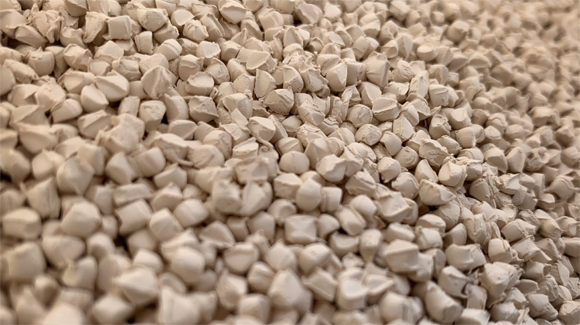
How Zircoa Brought its High-Performance MgO-PSZ to Ceramic Injection Molding
Advanced ceramics manufacturers have long faced a fundamental tension: the applications demanding the highest material performance often require the most complex component geometries. Yet traditional manufacturing methods have consistently struggled to deliver both simultaneously. Zircoa addressed this by formulating a dedicated CIM feedstock built around its proprietary Composition 1876, transferring the distinctive mechanical and microstructural attributes of that established MgO-PSZ grade into a fully injection-moldable system.
The Challenge: Performance Without Compromise on Geometry
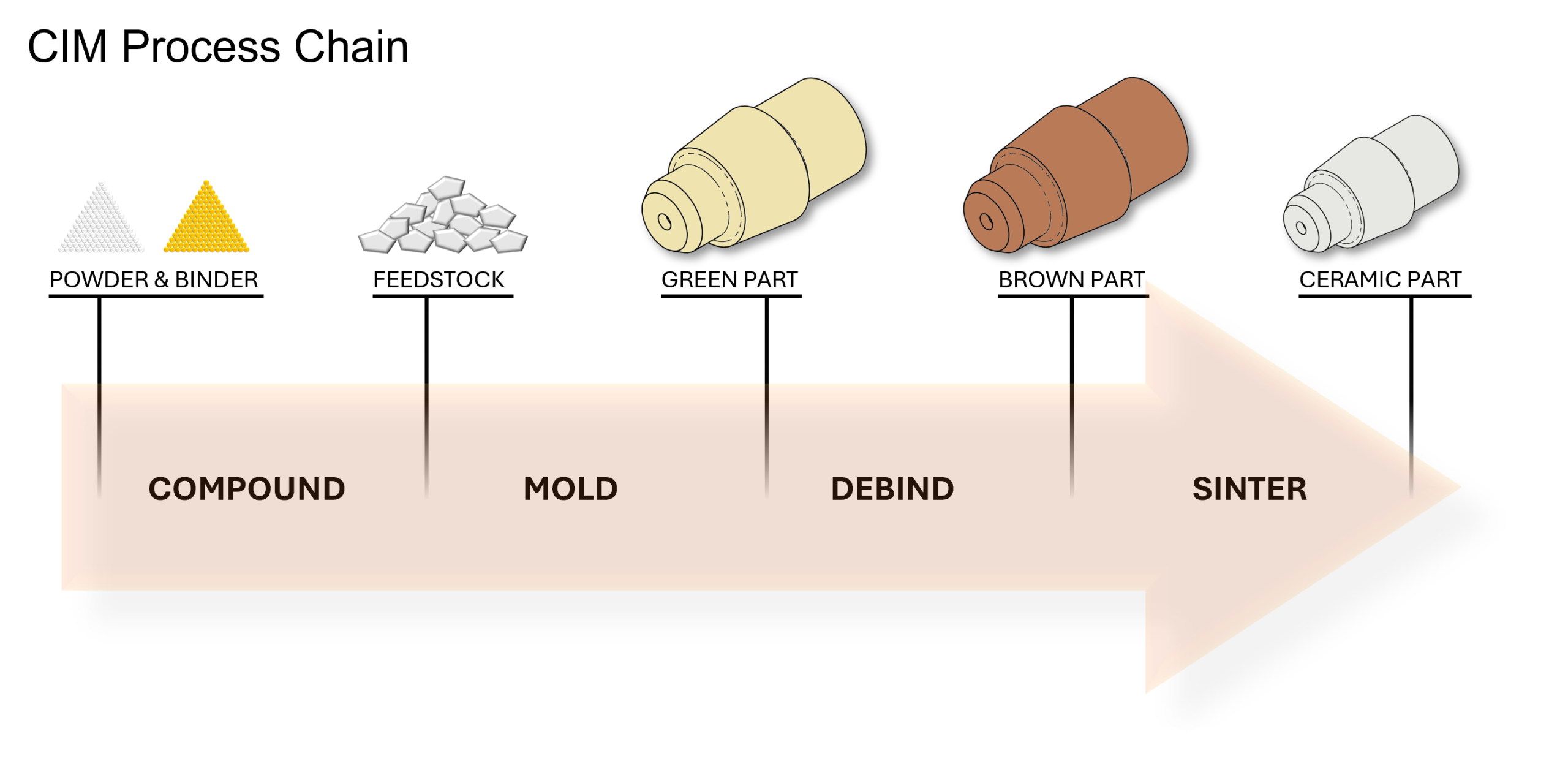
Ceramic Injection Molding (CIM) is a proven process for producing complex-shaped ceramic components at scale. The process follows a defined sequence: Ceramic powder is compounded with an organic binder to create a flowable feedstock, which is then injection-molded to form a near-net-shape green part. The binder is subsequently removed through debinding, the most process-sensitive step in CIM, where incompatibilities between powder and binder can cause irreversible cracking, warping, or density gradients, making feedstock formulation a critical engineering decision in its own right. The component is then sintered to full density. The result is the ability to produce intricate geometries that conventional press-and-sinter methods cannot achieve efficiently or economically, including undercuts, complex internal channels, and fine features.
 For manufacturers producing wear parts, fluid control components, sensors, and other high-performance technical ceramics, CIM offered a compelling path to more complex designs and higher production volumes. But a critical gap persisted: none of the commercially available CIM feedstocks offered the specific performance profile that Zircoa’s established MgO-PSZ compositions were known for.
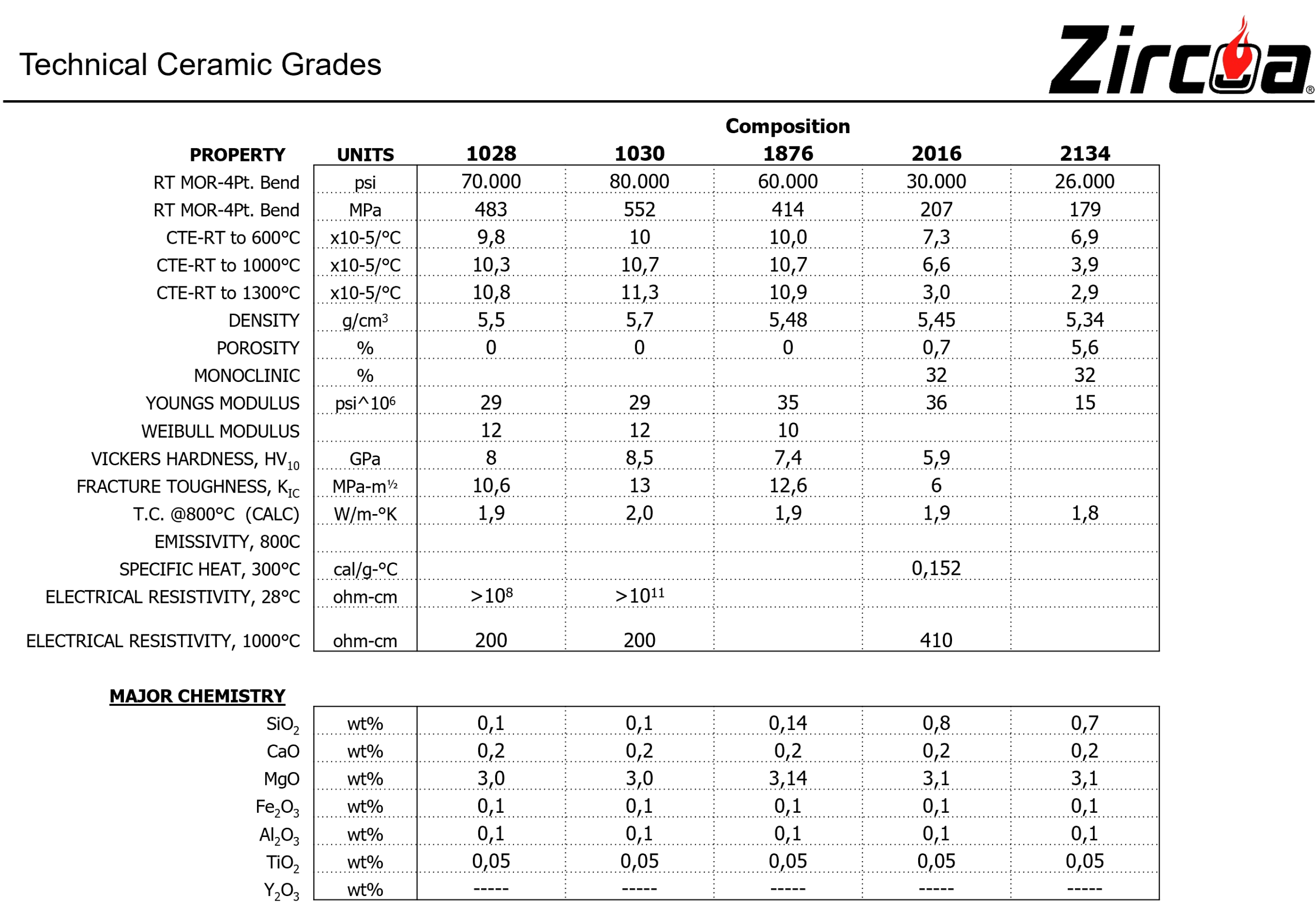
Magnesia partially stabilized zirconia (MgO-PSZ) is prized for its combination of high wear resistance, fracture toughness, corrosion resistance, and thermal stability. Manufacturers specifying Zircoa’s MgO-PSZ for its proven performance were effectively constrained to press-and-sinter routes, limiting achievable geometry and increasing per-part costs for complex or low-volume series.
The consequences of this gap were real:
- Inability to manufacture intricate near-net-shape components with this high-performance zirconia
- Higher per-part costs for complex or low-volume production series
- Lost opportunities for performance improvements in wear-, temperature-, and corrosion-critical environments
- Barriers to adopting advanced zirconia materials in geometrically demanding new applications
Zircoa recognized that their established Composition 1876 MgO-PSZ powder, already proven across demanding applications including wear parts and ceramic grinding media, had the right material properties to fill this gap if it could be successfully adapted for CIM processing.
The Solution: Proven Material, New Manufacturing Pathway
Zircoa GmbH’s development team identified both the market need and the technical pathway: adapt Composition 1876’s established powder characteristics to a proven CIM binder system, creating a zirconia feedstock that brings MgO-PSZ performance into injection molding workflows without sacrificing material integrity.
To accomplish this, Zircoa partnered with INMATEC Technologies GmbH, a specialist in ceramic and metal injection molding feedstock development. The collaboration centered on adapting Composition 1876 with INMATEC’s INMAFEED thermoplastic binder system, an industry-standard binder already well-regarded for its injection behavior and environmentally friendly debinding process.
The resulting feedstock, Zircoa Composition 1876 INMAFEED, delivered several critical advantages:
- Preserves established MgO-PSZ material performance — CIM-processed components deliver the same wear, corrosion, mechanical, and fracture resistance as conventional press-and-sinter parts
- Enables complex geometries — Injection molding unlocks intricate shapes, fine features, and near-net-shape designs beyond the reach of press-and-sinter
- Compatible with industry-standard processing — Globally adopted across CIM environments, the INMAFEED binder system integrates seamlessly into existing production workflows
- Supports environmentally responsible manufacturing — Designed around a clean debinding process, the INMAFEED binder system minimizes waste and promotes more sustainable production
- Expands application reach — Zircoa’s proven MgO-PSZ performance becomes accessible across a wider range of geometries and manufacturing workflows
The development process involved rigorous evaluation of mechanical, thermal, and chemical resistance benchmarks to confirm that the zirconia CIM feedstock matched the performance characteristics of Zircoa’s established press-and-sinter route. The successful validation confirmed that the feedstock’s material properties were fully transferable to the CIM process; this was a non-negotiable requirement for customers whose applications depend on predictable, certified material behavior.
 The feedstock was featured in PIM International, the leading global specialist magazine for powder injection molding — an industry recognition of its significance to the CIM materials landscape.
The Results: A New Market Entry and Expanded Design Freedom for Customers
The development and release of Composition 1876 INMAFEED in October 2022 marked Zircoa’s entry into the ceramic injection molding market. The move strategically extended Zircoa’s advanced zirconia materials into a new and growing segment of technical ceramics manufacturing.
For Zircoa customers, the feedstock removed a longstanding barrier: the need to compromise between material performance and geometric complexity. Engineers designing wear components, fluid control parts, sensors, and other demanding applications can now specify Zircoa’s proven MgO-PSZ performance profile while taking full advantage of CIM’s design flexibility and production scalability.
The feedstock is available for sampling, allowing customers to evaluate material performance in their specific applications and processing environments before committing to full production runs. Zircoa’s engineering team supports customers through feedstock evaluation and application development, drawing on decades of zirconia materials expertise.
Looking ahead, Zircoa has identified additional zirconia compositions as candidates for future CIM feedstock development, signaling a long-term commitment to expanding the role of advanced zirconia ceramics in injection molding applications. What began as a single product development project has opened a broader strategic pathway. With each new feedstock development, Zircoa’s full range of advanced zirconia materials moves closer to the design and production workflows of the global technical ceramics industry.
Ready to bring Zircoa’s MgO-PSZ performance into your CIM workflow? Whether you’re evaluating feedstock compatibility or developing a new component, Zircoa’s engineering team brings decades of zirconia materials expertise to your application. Contact us to get started.