
Custom Zirconia Refractory Linings for Extended Carbon Black Production
When a global carbon black manufacturer needed to increase reactor flame temperatures from 1900°C, the limit of conventional alumina refractory linings, to improve yield, produce specialty grades, and reduce fuel consumption. The manufacturer turned to Zircoa to engineer a zirconia-based refractory system that could withstand extreme temperatures while extending equipment life — and what started as a single reactor installation evolved into a multi-year partnership advancing carbon black production technology.
The Challenge: Temperature, Life, and Installation Efficiency
The manufacturer produces carbon black through controlled pyrolysis of hydrocarbon feedstocks at extreme temperatures. Their operations depended on a direct relationship: every 100°C increase in reactor flame temperature offered the potential of 1% yield improvement, along with a roughly 10% reduction in fuel costs. Reaching 2100°C and above would also unlock the capability to produce premium carbon black grades — specialty products that demanded sustained high-temperature conditions their existing refractory system couldn’t provide.
Their alumina-based refractory linings were suitable for flame temperatures up to 1850°C – 1900°C, with an expected 12-month service life. But the economics of higher-temperature operation were compelling enough to pursue, if the engineering challenges could be solved. Increasing flame temperature to 2150°C introduced a cascade of technical problems that needed to be addressed simultaneously rather than sequentially.
First, traditional alumina refractories couldn’t maintain structural integrity above 1900°C. Thermal stress accelerated degradation dramatically, threatening to reduce reactor life to just months rather than the expected 12-month cycle. Second, higher flame temperatures risked elevating reactor skin temperature beyond the 230°C threshold required to maintain thermal efficiency. Third, the existing installation process for the reactor’s cone section required hand-cutting individual bricks on-site, extending downtime during reactor rebuilds.
The manufacturer faced a complex engineering problem:
- Achieve sustained flame temperature above 2100°C operation without sacrificing refractory life
- Maintain reactor skin temperature safely below 230°C despite the temperature increase
- Eliminate field cutting and reduce installation time during reactor rebuilds
- Deliver a solution that justifies the higher material cost through operational improvements
Without solving all of these requirements simultaneously, the efficiency gains from higher temperatures would be offset by increased refractory costs, more frequent rebuilds, and extended downtime.
The Solution: Engineered Zirconia System With Iterative Development
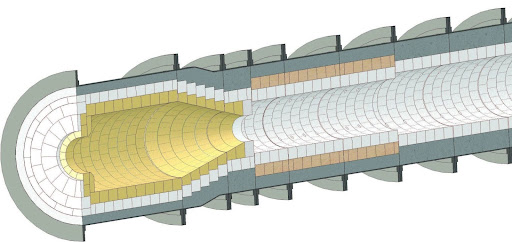
Zircoa began with early technical discussions to understand the reactor’s dimensional constraints and the manufacturer’s operational goals. The initial approach combined engineered zirconia brick in Composition 1651 for the combustion chamber with custom castable pieces in Composition 0872 for the cone section — the reactor’s hottest zone.
This hybrid design delivered several advantages:
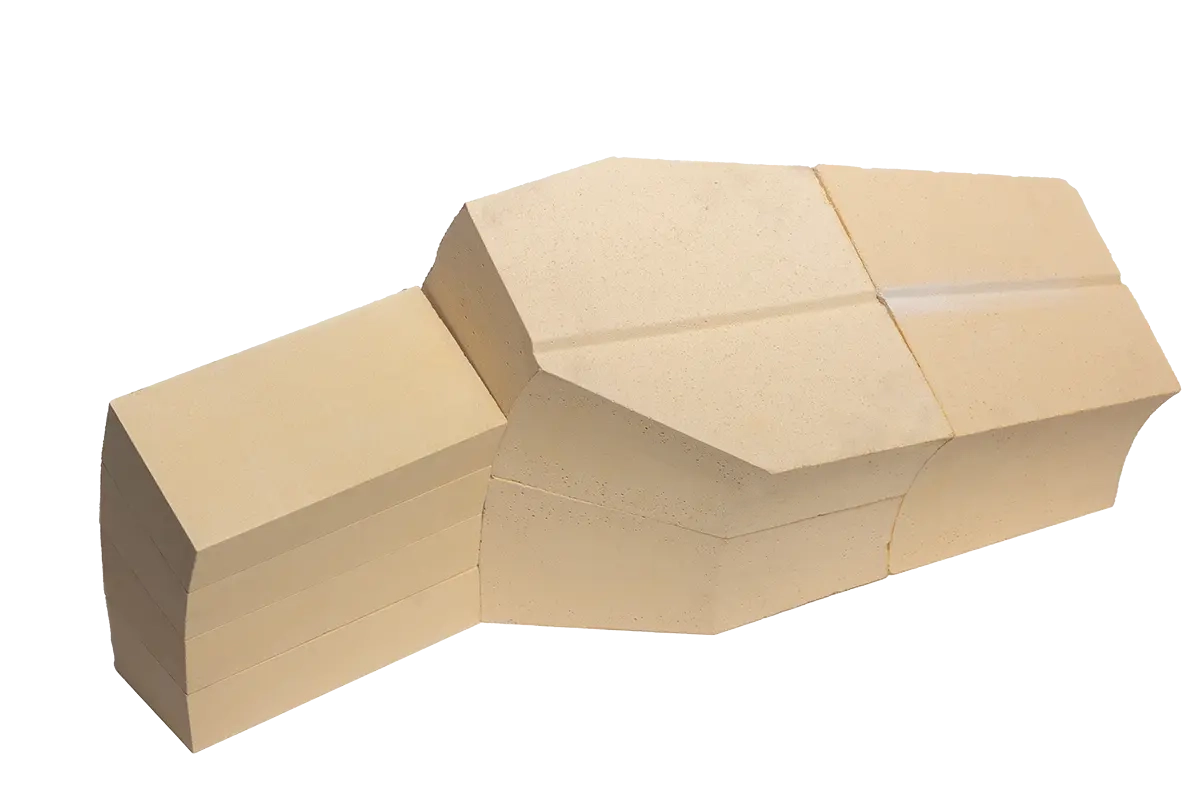
- Eliminated field cutting – Custom-engineered castable pieces with ship lap design arrived ready for installation, removing the need to hand-cut individual bricks in the tapered cone section
- Optimized thermal performance – Zirconia’s thermal shock resistance and structural integrity enabled 2150°C operation, while the engineered porosity provided insulation to maintain safe reactor skin temperatures
- Simplified installation – The ship lap design ensured structural integrity in the cone section while reducing installation time during reactor rebuilds
- Enabled temperature stratification – Proper layering with alumina backup material behind the zirconia hot face optimized the thermal gradient through the reactor wall
The first installation was completed in February 2019. The manufacturer evaluated performance across multiple criteria: refractory life at elevated temperatures, reactor skin temperature stability, yield improvements from higher flame temperature operation, and installation efficiency.
But early operation revealed a critical issue: brick failure at the 12 o’clock position with elevated skin temperature. Zircoa’s failure analysis identified eutectic formation between the zirconia and alumina layers; this phenomenon is where materials react at elevated temperatures to form a lower-melting-point compound that compromises structural integrity.
This discovery triggered a collaborative engineering response. Zircoa and their alumina-backup materials supply partner, HarbissonWalker International, worked together to redesign the material stackup, eliminating the conditions that enabled eutectic formation. The refined design was validated in the second installation, completed in August 2023, incorporating the lessons learned from the first reactor’s performance and failure analysis.
As part of an ongoing performance optimization effort, the team has developed a modified brick design to be featured in the next installation. This enhancement will better accommodate thermal expansion and contraction during dynamic heat-up and cool-down cycles, improving the overall structural stability of the refractory system.
The Results: Doubled Life and an Expanding Partnership
The engineered zirconia refractory system delivered the performance the manufacturer needed. The second installation achieved close to 24 months of operation, doubling the 12-month life expectancy of the previous alumina system while running at the higher 2,100°C flame temperatures required for yield optimization and premium product manufacturing.
Beyond extending refractory life, the solution addressed the manufacturer’s complete set of operational requirements. Reactor skin temperatures remained safely below 230°C despite the elevated flame temperature. The custom castable pieces with ship lap design eliminated field cutting, reducing installation time during reactor rebuilds. The yield increase and fuel consumption reduction justified the higher material cost, delivering improved economics along with extended equipment life.
The success of the 2019 and 2023 installations established an ongoing partnership. The manufacturer has committed to additional reactor linings, including at least one installation in 2026 and three more reactor rebuilds planned for 2027. The collaboration now extends beyond material supply to include co-development work on further product improvements, continued flame temperature increases, and enhanced stability of both brick and castable components.
What began as a single reactor installation to solve a temperature and life limitation has evolved into a multi-year partnership driving continuous improvement in carbon black production efficiency. For the manufacturer, the relationship delivered validated materials that enabled their operational goals. For Zircoa, it demonstrated the value of collaborative engineering that goes beyond material supply to solve complex application challenges through iterative design and failure analysis.
Facing temperature or refractory life limitations in high-temperature processes? Zircoa’s engineering team can develop custom refractory linings and other solutions for demanding industrial applications. Contact us to discuss your specific requirements.